Legal Wedding Registration
A legally binding wedding in Bali, with the religious ceremony and civil registration handled. We guide you through every requirement and document.
A legal wedding in Bali produces a marriage that exists under Indonesian law and, once legalised, back home too. Foreign couples can absolutely do this, and we arrange it regularly. It is also the one package where we begin with a hard eligibility check, because Indonesian law sets conditions that surprise almost everyone.
What Indonesian law asks of you
Indonesia has no civil-only marriage. A marriage becomes valid through a religious ceremony, which the state then registers. That single rule shapes the entire process.
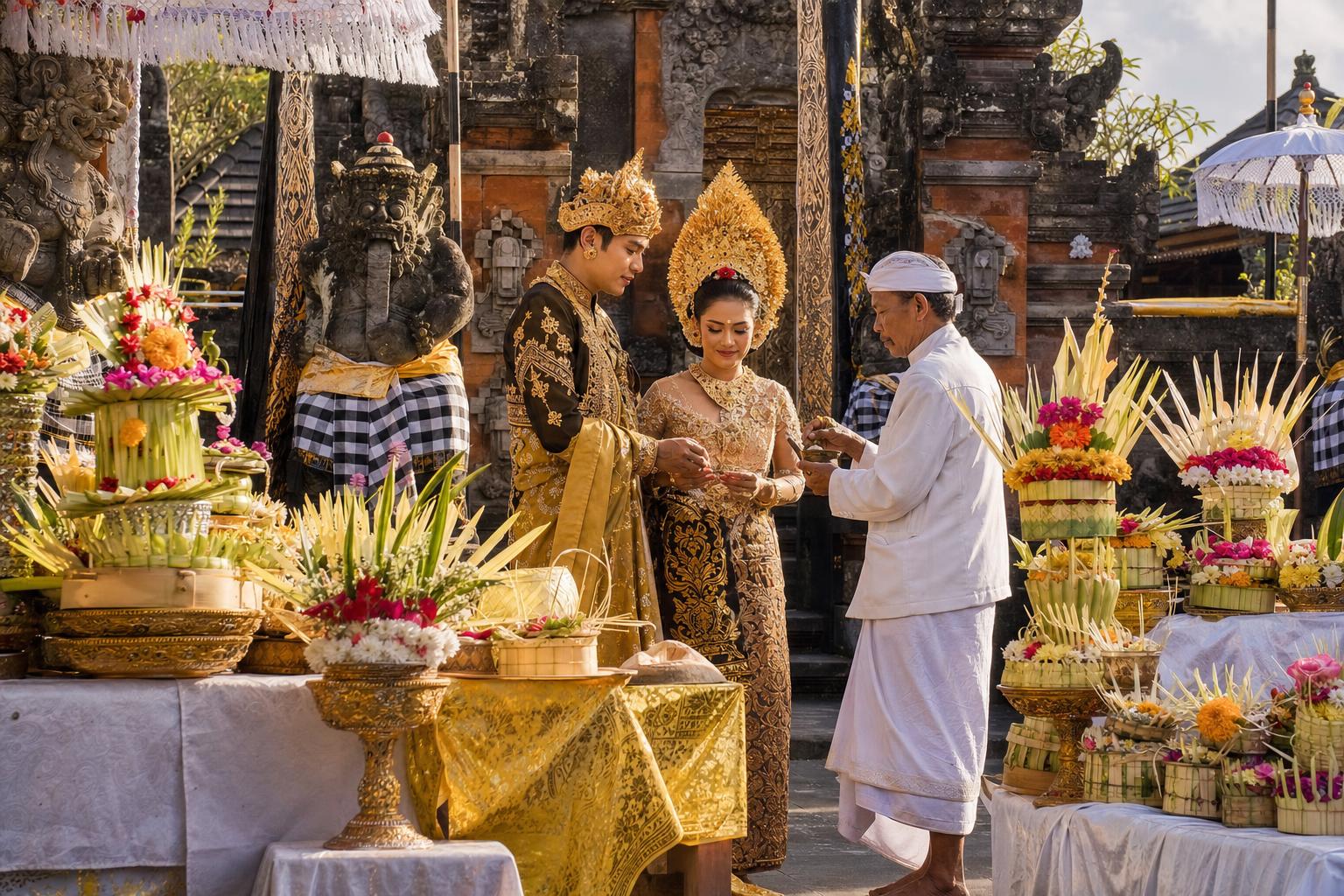
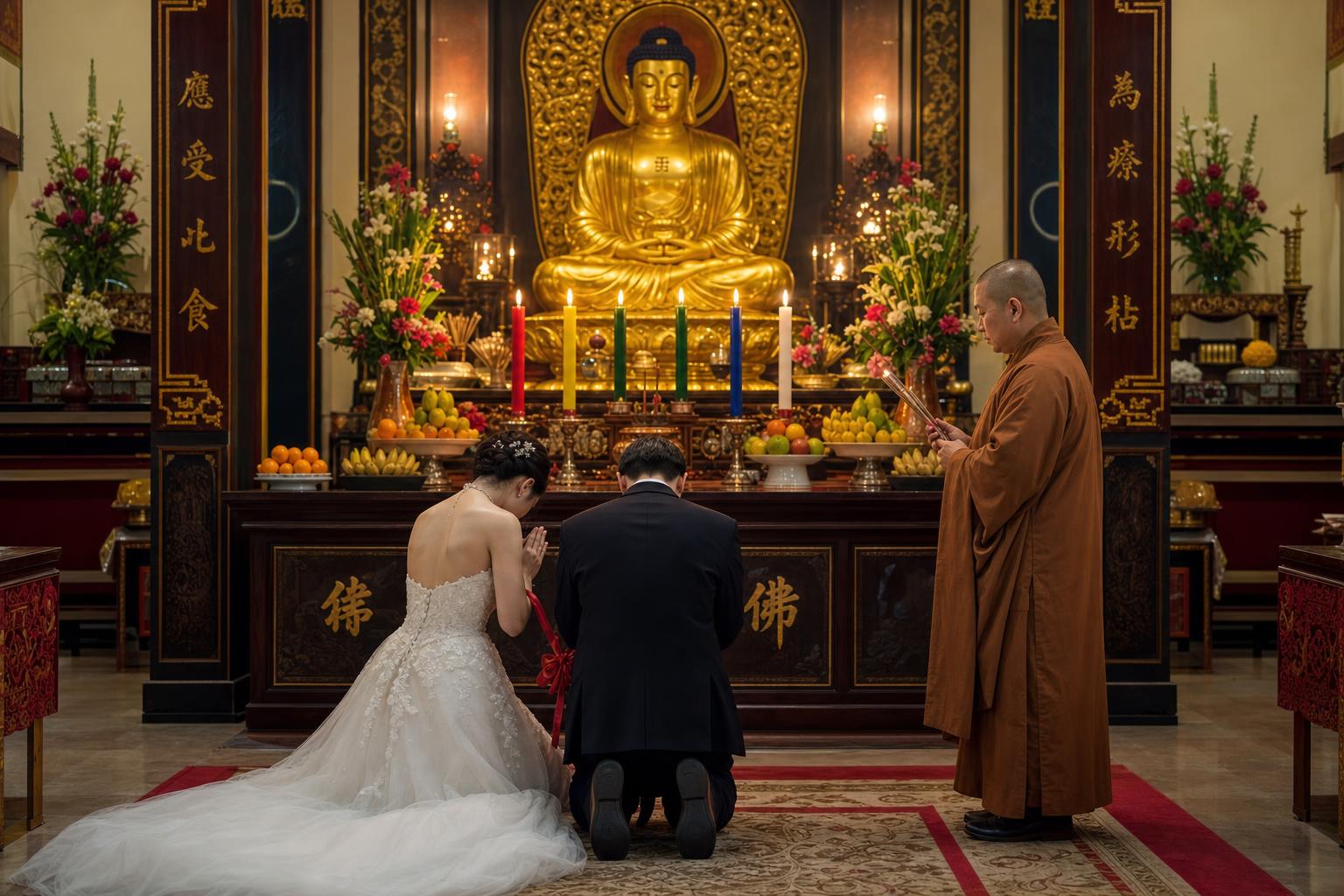
You both need to declare the same religion, one of the six Indonesia recognises: Islam, Protestantism, Catholicism, Hinduism, Buddhism, or Confucianism. A priest, pastor, imam or pandita conducts the ceremony, and the civil side follows. Non-Muslim marriages are registered at the Catatan Sipil, the civil registry office; Muslim marriages go through the KUA.
Two consequences follow. Couples of different faiths cannot register a marriage in Indonesia, and same-sex marriage is not recognised here at all. If either applies to you, a commitment ceremony with the legal part signed at home gives you the same wedding without the wall. Our guide on whether you can get married in Bali legally covers the whole picture.
The documents, starting with the slowest one
The file is longer than most couples expect. Passports and your entry stamps, and a tourist visa is fine. Birth certificates with sworn Indonesian translations. A divorce decree or a former spouse’s death certificate if either of you was married before. Religious paperwork for your faith; Catholics have the longest list, with a freedom-to-marry letter from the parish, a pre-marriage course, and a delegation letter to the church here. Add two witnesses over 18 with passport copies, and couple photos in the exact format the registry specifies.
The piece we always start with is the Certificate of No Impediment, the letter from your embassy confirming you are free to marry. Every foreigner needs one, and every country issues it its own way: some consulates sign it in Bali within a day, others only work from Jakarta, and a few make you start with your registry at home. Some CNIs expire after three or six months, so even the timing needs managing.
How the day itself unfolds
The file is lodged with the registry at least ten working days before the wedding, and we aim for earlier so any translation problem surfaces while there is still time to fix it.
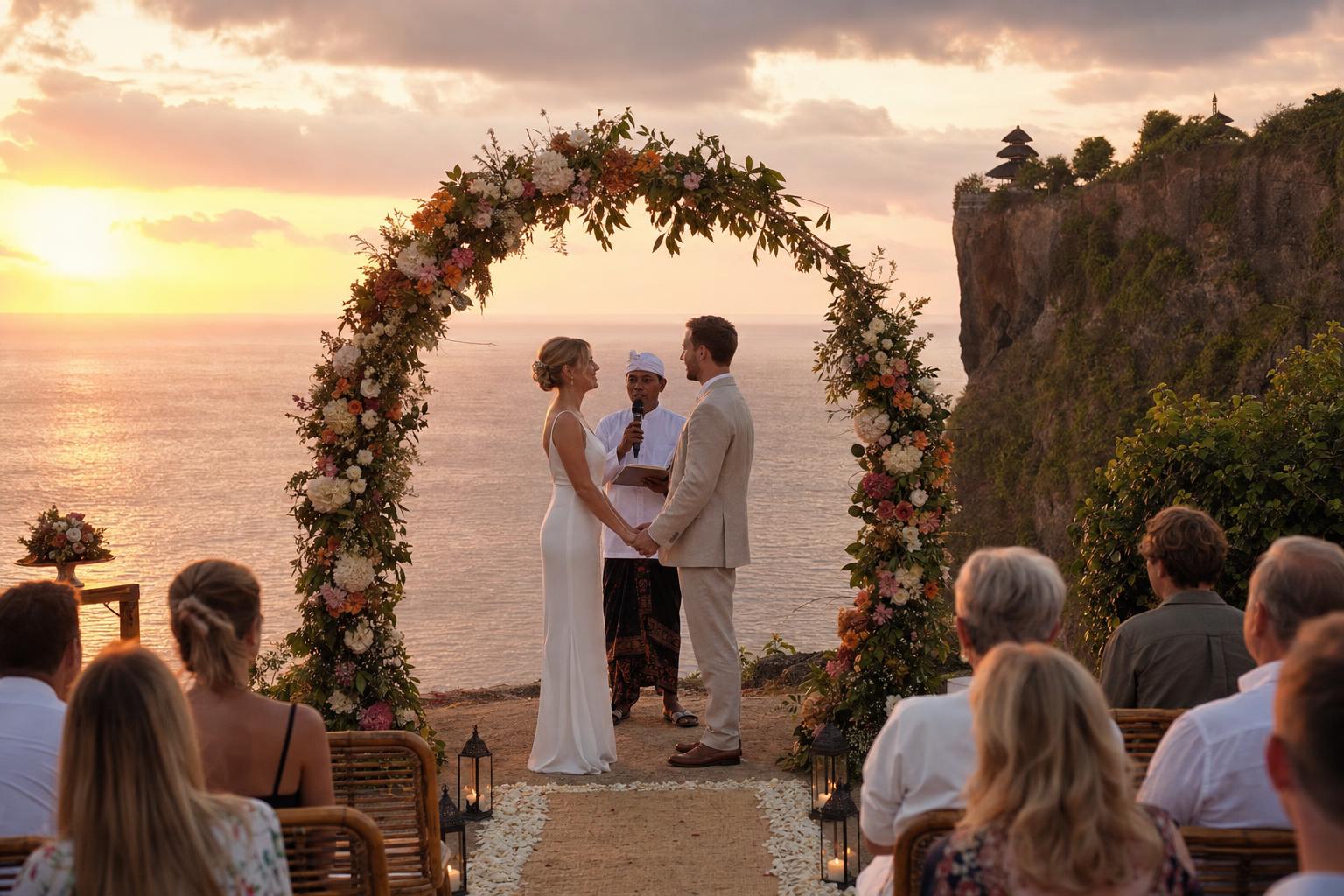
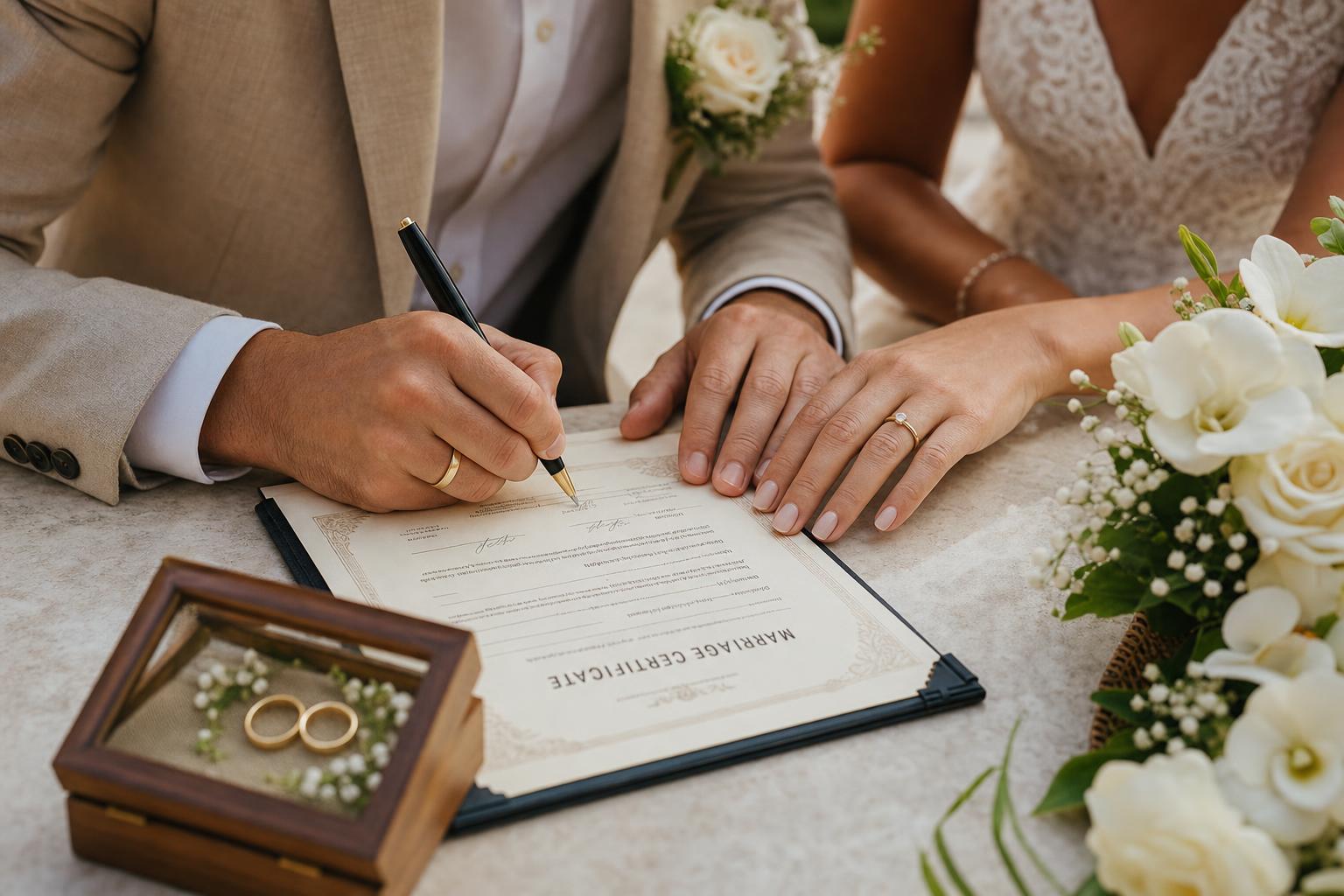
On the day, the religious ceremony comes first, because under Indonesian law the ceremony is what creates the marriage. The civil registrar attends or meets you straight afterwards; you and your witnesses sign, and the marriage exists. The law only asks about the officiant, so the setting is yours: a temple compound, a flower-framed lawn, or a chapel wedding if you are marrying Catholic.
Your Indonesian marriage certificate, the Akta Perkawinan, is ready within a few days to two weeks. Then comes the apostille from the Ministry of Law, the stamp that makes the certificate count abroad. Our step-by-step guide to the Indonesian marriage certificate walks the whole chain in order.
The honest timeline and cost
Plan on two to four months of preparation, driven mostly by the CNI and the translations. Couples who start at three months find the process calm. Couples who start at three weeks find it impossible.
On money: our fee covers the process management and the registry coordination. Sworn translations, embassy fees, and the religious ceremony itself sit on top and vary with your nationality and faith. All in, most couples land between 1,000 and 2,500 USD above the wedding itself. The real cost of a Bali wedding puts that figure next to everything else you will spend.
When signing at home is the smarter move
We will say it plainly: most international couples we work with do not take this route. They sign at their local registry office, sometimes in jeans, then come to Bali for the wedding everyone remembers. The paperwork disappears, the date is entirely yours, and the day looks identical to your guests.
The legal route earns its effort in specific cases: the religious ceremony matters to you, your home country makes civil marriage slow, or you want the marriage made in Bali on paper, for the story. Tell us your nationalities and your faith, and within a day we will tell you which route fits. That first check costs nothing.
Couples who want the legal marriage itself to happen in Bali, and whose faith and paperwork line up with Indonesian requirements.
What's included
Religious ceremony
A ceremony recognised by the Indonesian state, appropriate to your faith.
Civil registration
Catatan Sipil registration for non-Muslim marriages, handled for you.
Documents managed
Certificate of No Impediment, certified translations, and legalisation.
A clear checklist
We start early and give you exactly what to prepare, step by step.
What to expect
Assess the route
We check your situation against Indonesian requirements and confirm it is workable.
Prepare documents
We guide the paperwork and translations over the months before.
Marry & register
The religious ceremony takes place and the marriage is registered.
Why couples choose us
We have filed these, repeatedly
The document list is not the hard part. Knowing which office wants what, in which order, and how early is what keeps a legal wedding from falling over.
We tell you early if it will not work
Indonesian law ties civil registration to religion, and not every couple qualifies. We check your situation on the first call, not after you have booked flights.
Translation and legalisation handled
Certificates, sworn translations, and the trip to your embassy or consulate. We manage the chain so the marriage is recognised at home as well as here.
Estimated cost
This covers the registration process, the paperwork, and the coordination with the civil office. Sworn translations, embassy fees, and the religious ceremony itself are separate and depend on your nationality and faith. Put a number against your own day in the price simulator.
Good to know
Common questions
What does a legal marriage in Indonesia require?+
Both partners must declare the same religion, one of the six Indonesia recognises, and hold a religious ceremony that the state then registers. On top of that come a Certificate of No Impediment from each of your embassies, birth certificates with sworn translations, and two witnesses.
Can two foreigners get legally married in Bali?+
Yes, and a tourist visa is enough for it. The conditions are that you both declare the same recognised religion and give the paperwork two to four months of lead time. We check your specific situation before you commit to anything.
How long does it take to arrange?+
Usually two to four months, driven mostly by the Certificate of No Impediment and the sworn translations. The in-Bali part is short: the file is lodged a couple of weeks ahead, and the ceremony and registration happen on the same day.
What is a Certificate of No Impediment and where do we get one?+
A letter from your own embassy or consulate stating you are free to marry. Every foreigner marrying in Indonesia needs one, each country issues it differently, some only from Jakarta or via your home registry, and some expire after three or six months. It is the slowest piece, so we start there.
Will our Bali marriage be recognised in our home country?+
Almost always, yes. Indonesia joined the Apostille Convention in 2022, so the certificate gets a single apostille from the Ministry of Law and most countries accept it directly. Some also ask you to record the foreign marriage at your local registry once home.
Can we marry legally in Bali if we have different religions?+
No. Indonesia only registers marriages performed within one shared, recognised religion, so interfaith couples cannot marry legally here as they are. Most in that situation sign at home and hold a symbolic ceremony in Bali instead.
What if the legal route is complicated for us?+
We tell you honestly on the first call, before you book anything. Often the smarter path is marrying legally at home and holding a commitment ceremony here: the day looks identical and the paperwork disappears.