Buddhist wedding ceremony
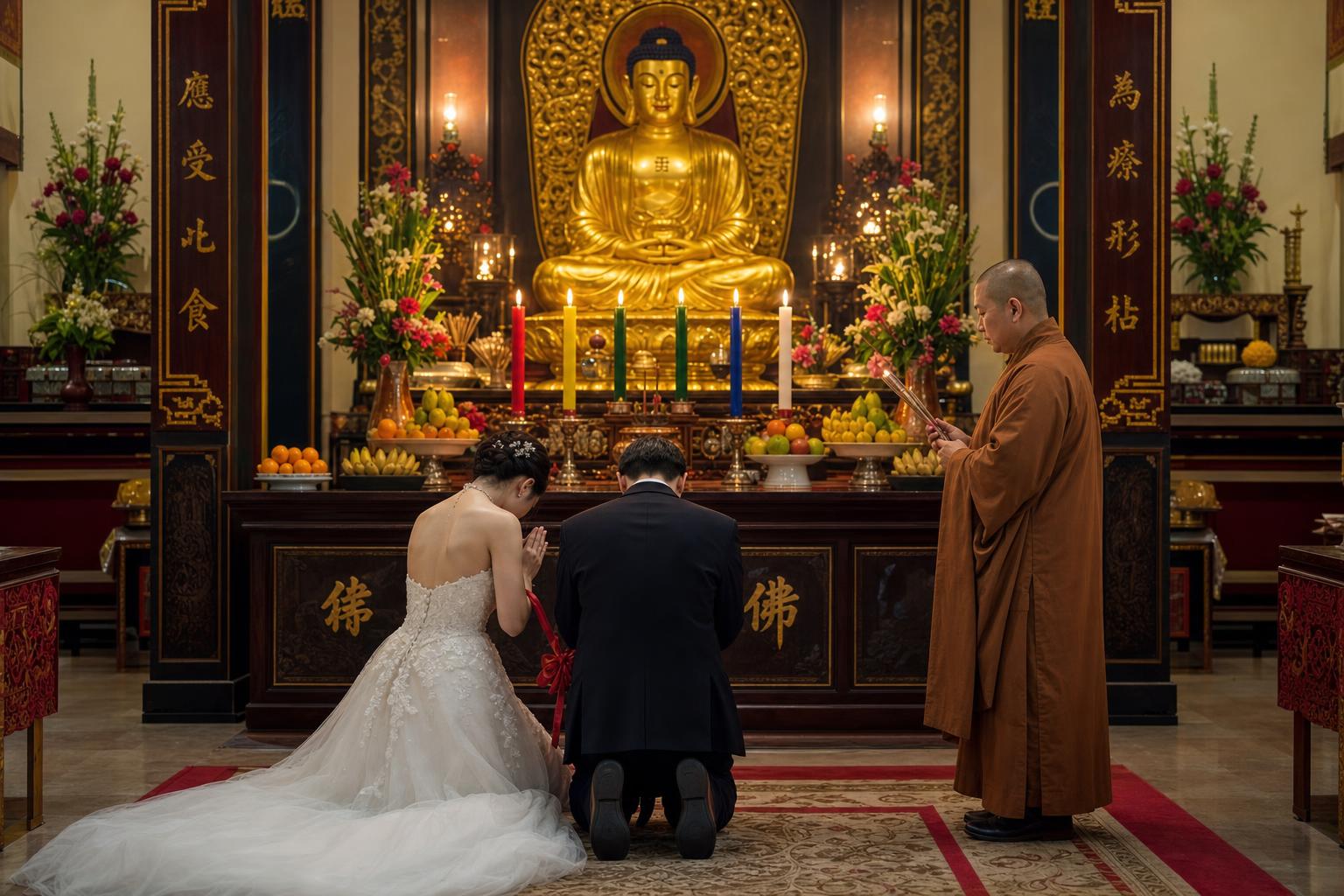
A Buddhist wedding ceremony in Bali before the Buddha altar, led by an authorised pandita, with candles, incense and the binding of hands. Legal or symbolic.
A Buddhist wedding in Bali runs on stillness. There is chanting, incense and candlelight, and long stretches where nobody speaks at all; guests regularly tell us afterwards it was the calmest wedding they have ever attended. And because Buddhism is one of the six religions Indonesia recognises, the ceremony can be your legal marriage, which few destination weddings can claim.
What the ceremony feels like
Chanting opens and closes everything. Depending on who leads, it comes in Pali or in Indonesian, and you are not expected to follow the words; the rhythm does the work. Between the chants the ritual moves slowly, and every pause is deliberate.
Plan for 45 minutes to an hour. There is no processional playlist and no applause, and we prepare your guests for that, because the silence lands better when nobody is wondering whether they missed a cue.
One scheduling detail matters more than couples expect: monks in the Theravada tradition take their main meal before noon, so if your monk is Theravada, a morning ceremony fits his day and we build yours around it.
Where to hold it
The natural setting is a vihara, a Buddhist temple, and Bali has several. The best known is Brahmavihara Arama, the island’s largest Buddhist monastery, set into the hills above the north coast with gardens worth the trip on their own. Ceremonies there happen with the monastery’s agreement and on the monastery’s terms: modest dress, quiet, a donation rather than a venue fee, and the religious calendar decides before your calendar does.
The honest trade-off is distance. The north coast sits around three hours from the southern resorts, so we either build a long day with an early start or plan a night up north; the road through the Munduk and Bedugul highlands is reason enough to stay over.
If the travel does not fit your week, the ceremony can sometimes come to you instead, at your villa or venue, with a proper Buddha altar set up for the day. That depends on the majelis, the Buddhist council that oversees your ceremony, so we confirm it before you book the venue.
Legal marriage or symbolic blessing
For the marriage to be legal in Indonesia, you both declare the Buddhist faith, the religious ceremony comes first, and the civil registration follows. One check comes before everything else: the pandita who leads the ceremony and signs your religious marriage document must be authorised to do so, and a monk’s title alone is not that authorisation. Our Buddhist wedding guide explains how to confirm it, along with the guidance sessions and the Dukcapil deadline. The paper trail starts months out, mostly because of the certificate of no impediment from your embassy. Our guide to getting an Indonesian marriage certificate walks the whole sequence in order, and our legal wedding package manages it for you. Budget between 700 and 2,500 USD for the ceremony itself, with the registration billed on top.
Mixed-faith couples, and anyone who simply does not want the admin, hold the same ceremony as a symbolic blessing with nothing to sign. Couples who want no religious framing at all usually look at our commitment ceremony instead. The rules behind all of this are specific, and can you get married in Bali legally explains them without the folklore.
What couples get wrong
Three things, mostly. They treat the vihara like a venue that takes a deposit, when it is a working place of worship that says yes to some requests and no to others. They picture a champagne toast on monastery grounds, which will not happen; the celebration belongs back at your villa. And they fix a date before anyone checks the religious calendar, then discover the full moon has other plans.
None of these are problems when the ceremony is planned in the right order: officiant first, then setting, then date, then everything else. Tell us your tradition and your week in Bali, and we will tell you what is possible before you book a single flight.
What's included
The Buddha shrine
An altar before a Buddha statue with fruit, flowers, incense, and candles, the heart of the ceremony.
The five candles
Five candles of different colours are lit, with incense, as the couple bow and take their vows.
Binding of hands
The couple's hands are tied with a red ribbon and a yellow cloth is laid over them, the symbolic joining.
A monk or Romo
A Buddhist monk or Romo Pandita leads the prayers, the chanting, and the blessing.
Legal or symbolic
Hold it as a legally recognised Buddhist marriage, or purely as a symbolic blessing. We arrange either.
How it comes together
-
Prepare the ceremony
We arrange the monk or Romo, a vihara or your chosen venue, and the offerings, flowers, and candles.
-
The ritual
The couple bow to the Buddha, recite the prayers, light the five candles and incense, and are bound in ribbon and cloth.
-
The blessing
The monk completes the blessing, and the celebration continues however you wish.
What we do differently
The right monk for your tradition. Theravada, Mahayana, or a Romo leading in Indonesian. We ask which lineage matters to your family before booking anyone, because a mismatch is not something you fix on the day.
The shrine and the ritual items handled. The five candles, the incense, the water, the binding of hands. We source what the ceremony needs and set the shrine properly rather than approximating it.
Legal or symbolic, both routes mapped. If you want the marriage registered in Indonesia, we tell you which documents you need and how long they take. If you only want the ceremony, we say so and skip the paperwork.
Questions couples ask
Something else on your mind? Ask us directly.
Can a Buddhist wedding be legally binding in Bali?
Yes. Buddhism is one of Indonesia's recognised religions, so a Buddhist marriage can be legal: a religious certificate is issued by the Buddhist society (WALUBI), followed by civil registration. It can also be held purely as a symbolic blessing with no paperwork.
Where is the ceremony held?
Traditionally in a vihara (Buddhist temple), the most fitting and private setting; Brahmavihara Arama in north Bali is the best known. It can also be held at your villa, hotel or chosen venue, and we confirm with the monk that the setting works before anything is booked.
What happens during the ceremony?
The couple bow before the Buddha shrine, recite prayers and mantras, light five differently coloured candles and incense, and have their hands bound with a red ribbon under a yellow cloth. A monk or Romo leads throughout, opening and closing with chanting.
Do we both need to be Buddhist to marry in Bali?
For a legal Buddhist marriage, yes: Indonesian law requires you both to declare the Buddhist faith before the marriage can be registered. For a symbolic blessing the bar is sincerity rather than paperwork; we confirm with the monk, and mixed-faith couples are generally welcome.
How long does a Buddhist wedding ceremony last?
Usually 45 minutes to an hour, chanting included. We often place it in the morning: monks in the Theravada tradition take their main meal before noon, and the ceremony sits naturally before it.
Can we have a blessing at Brahmavihara Arama?
It is possible with the monastery's agreement and on its terms: modest dress, quiet, and dates that respect the monastery calendar. A donation replaces a venue fee. Allow around three hours of driving from the southern resorts, or plan a night on the north coast.
What should we and our guests wear?
Shoulders and knees covered, shoes off in the shrine hall, and nothing designed to steal the scene. White and soft colours read beautifully in a vihara. We brief your guests beforehand so nobody is caught out at the door.