Where to get married in Bali: a region by region guide
Uluwatu or Ubud, Seminyak or Sanur. A real comparison of Bali's wedding regions, so you can pick the part of the island that matches the day you actually want.
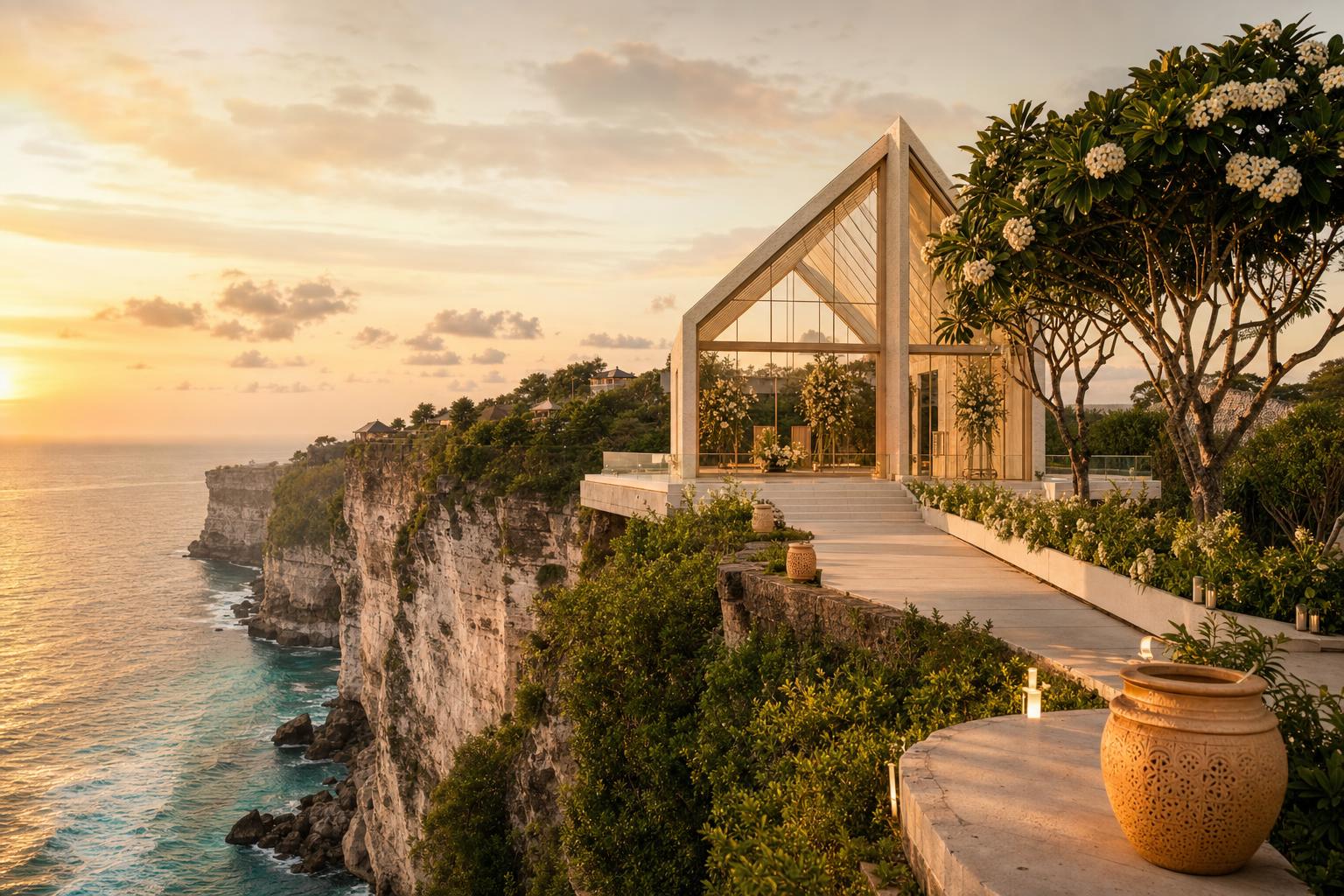
Every couple who calls me starts with a picture in their head, and it is almost always tied to a place. A cliff dropping into the ocean. A rice terrace at dusk. Bare feet on white sand with a beach club humming behind them. Bali is not one wedding backdrop, it is a dozen different ones, and picking the right region matters more than picking the venue itself.
Get the area right and the venue search becomes easy, because everything left on your list already fits the mood. Get it wrong and you spend months trying to make a beach club feel like a jungle retreat.
So here is the honest comparison, region by region, the way I actually walk couples through it.
I also put together a short video covering the same ground, if you would rather watch than read:
Uluwatu and the Bukit peninsula: the clifftop drama
If you picture white limestone cliffs, an infinity edge, and the sun dropping straight into the Indian Ocean, you are picturing Uluwatu. This is the most photographed corner of Bali for a reason.
It suits couples who want the jaw-drop view and do not mind paying for it. Venues here range from glass-walled chapels perched on the cliff edge to private villas with their own infinity pool over the water. Sunset ceremonies are the whole point, so build your timing around it.
The trade-off: it is a drive from the airport (45 minutes to over an hour depending on traffic), and it is Bali’s most in-demand, most expensive area. Book the popular clifftop names 12 to 18 months out.
Ubud: jungle, rice terraces, and quiet
Ubud is the opposite mood entirely. Trade the ocean for river gorges, terraced rice fields, and noticeably cooler air. This is where I send couples who want intimacy and nature over spectacle and sand.
Ceremonies here sit among rice terraces or over a river valley, often with a genuine sense of Balinese craft and ceremony around you, carved stone, offerings, gamelan music drifting from a nearby temple. It is a smaller, greener kind of beautiful, and it suits smaller guest lists particularly well.
Ubud sits inland, about an hour from the airport, so factor that into your guests’ logistics if you are also planning beach days around the wedding.
One thing worth knowing before you fall for a photo: the jungle infinity pools that show up on every Bali wedding mood board, a couple perched on a curved ledge with nothing but green below, are almost always portrait spots, not ceremony venues. They belong to a handful of small properties built specifically for the shot. If that image is the one in your head, tell your photographer early and we build it into your pre and post-wedding photography session rather than expecting to say your vows there.
Seminyak and Canggu: style, sand, and a party that keeps going
Seminyak and Canggu share a coastline and a personality: beach clubs, design-forward villas, and the island’s best restaurants a few minutes’ drive away. Both give you a classic west-facing sunset ceremony on the sand, then a reception that can roll straight into a beach club night.
Seminyak leans a little more polished, Canggu a little more boho and creative, but the practical case for both is the same: your guests can walk to dinner, a bar, or the beach the next morning without a driver. If your crowd wants a holiday wrapped around the wedding, this is the easiest place to give it to them.
Nusa Dua and Jimbaran: the all-in-one resort
Nusa Dua is Bali’s most polished, gated enclave: five-star resorts, manicured lawns, and calm white-sand beaches built specifically for events. Jimbaran sits just next door with a similar resort feel and a famous curve of beach known for seafood dinners on the sand.
Both suit larger guest lists and family-heavy weddings especially well, because everything, ceremony lawn, ballroom, guest rooms, spa, sits on one property. If you want a day with minimal moving parts and space for a hundred guests or more, this is where I point people.
Sanur: calm water and old Bali charm
Sanur is Bali’s quieter, more local east-coast beach town, calm reef-protected water instead of surf, a slower pace, and a genuine village feel alongside the resorts. It suits couples who want a beach wedding without the Seminyak scene, or who are marrying an older or younger crowd who will appreciate the gentler waves and the walkable town.
Tabanan and Candidasa: the wilder edges
Further out, Tabanan brings rice-terrace scenery on the island’s less-visited west side, often at a real price advantage. Candidasa and the Karangasem coast sit in the shadow of Mount Agung, with black-sand beaches, coral coastline, and a genuinely untouched feel.
Both areas mean more driving for guests and fewer nearby hotels, but they reward couples chasing something quieter and less familiar than the main tourist strip.
The islands and the highlands
Bali is more than its south coast. Nusa Penida has the most dramatic cliffs in Indonesia, thirty to forty-five minutes by fast boat from Sanur, and it is elopement country rather than guest-list country: the roads are rough and the crossing can be cancelled. Its quieter neighbour Nusa Lembongan is the practical one, with real resorts, proper reception capacity, and the same turquoise water.
Inland and north, the Munduk and Bedugul highlands sit around a thousand metres up among lakes, waterfalls, and coffee plantations, where the nights are genuinely cool. Amed on the east coast gives you black sand under Mount Agung and almost no infrastructure, which is exactly why couples pick it.
When Bali is not quite the answer
Some couples want the island feeling with fewer people in the frame. The Gili Islands have no cars at all and water clear enough to see the bottom from the jetty. Lombok is twenty-five minutes away by plane, with long empty bays in the south and a real luxury pocket on the Sire peninsula. Sumba is an hour’s flight and another world entirely: savannah hills, empty surf beaches, and a short list of remarkable resorts built for buyouts.
None of these are Bali administratively, so the legal position is identical while the mood is completely different. We plan weddings on all of them.
How to actually choose
If you are stuck, work through it in this order:
- What does the ceremony photo in your head look like? Cliff, jungle, beach, or garden. That instinct usually points straight at a region.
- How big is your guest list? Larger, family-heavy weddings do well in Nusa Dua or Jimbaran, where everything sits on one property. Smaller, intimate groups have more freedom, including Ubud and the quieter east coast.
- What do your guests want to do around the wedding? A crowd that wants beach clubs and restaurants belongs in Seminyak or Canggu. A crowd happy to unplug fits Ubud, Tabanan, or Candidasa.
- What is your budget doing? Uluwatu and Nusa Dua carry a premium for the view and the polish. Sanur, Tabanan, and Candidasa stretch further. The wedding price simulator has a region setting, so you can see what moving from one coast to another does to your total. For the bands by guest count, what a Bali wedding typically costs sets them out. And because several fees follow the area rather than the venue, the banjar contribution among them, read the real cost of a Bali wedding before you commit to a coast.
One rule I give every couple, regardless of region: pick one area and keep your guests near it. Bali looks small on a map but is slow to cross, and moving a wedding party across the island eats an entire afternoon nobody gets back.
Which region suits you also depends on when you come. The hills are wetter than the coast, the Bukit is windier than the east, and the west-facing beaches change character entirely in the rainy months. The best time to get married in Bali covers which months suit which coast.
Once you have settled on a region, the full planning guide walks through everything that comes next: season, budget, and building your vendor team. And if an elopement for just the two of you is on the table, how to elope in Bali covers the regions that work best when it is only the two of you on the cliff.
Tell me the picture in your head and your rough guest count, and I will tell you honestly which region fits, before we even talk about a specific venue.