The best time to get married in Bali, month by month
Bali's dry season is not the whole answer. Here is what each month actually does to your wedding day: rain, wind, crowds, prices, and the dates I tell couples to avoid.
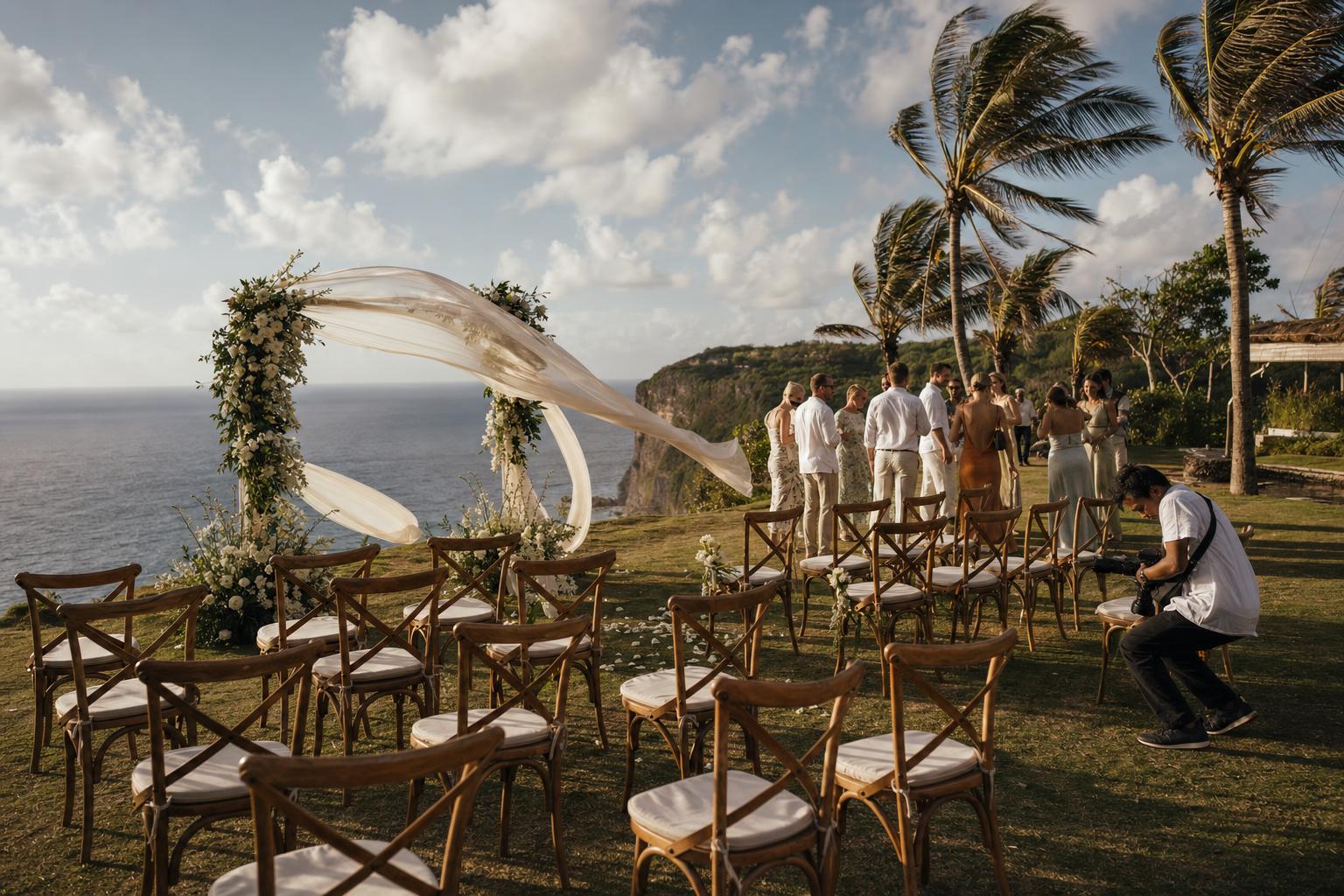
Ask ten websites when to get married in Bali and ten of them will tell you the dry season, April to October. They are right, and that is about a third of the answer.
Those seven months contain very different weddings. August is the driest month of the year. It is also the windiest, the busiest and the most expensive. May is nearly as dry, noticeably cheaper and has a fraction of the crowd. A rainfall chart cannot show you that, because a rainfall chart only measures rain.
I plan weddings here all year, from Sanur, and the date is the first thing I want to settle with a couple. It sets your budget, your venue shortlist and how hard your guests have to work to get here. So here is what every month actually does to your day.
The short answer
May, June and September. If you have flexibility, take one of those three.
They sit inside the dry season with rainfall low enough to plan around, but outside the July and August crush that fills the island and lifts every price on your quote. Venues still have Saturdays. Photographers still answer emails in a day. Your guests pay less for flights.
September is the one I push hardest. It has the calm of May with the settled dryness of August behind it, and by then the peak-season rates have come off.
If those months do not fit your life, keep reading. There is a good version of nearly every month here, February included, as long as you know what you are actually buying.
Bali has two seasons, and the wet one is shorter than you think
The long-run averages for Denpasar put the wet season at roughly 11 November to 29 March. That is about four and a half months, not the half-year most couples picture.
What matters more is the shape of the rain. A wet-season day in Bali is usually bright in the morning, then dark and torrential for an hour or two somewhere between 2pm and 6pm, then clear and steaming again by dinner. It is nothing like the all-day grey a couple from Melbourne or Manchester has in mind.
It is also, inconveniently, aimed straight at when your ceremony wants to be.
Month by month
| Month | Rain | Wet days | In one line |
|---|---|---|---|
| January | 260 mm | 18 | The wettest month of the year. |
| February | 235 mm | 16 | Wet, and the emptiest the island gets. |
| March | 150 mm | 13 | Drying out, but Nyepi lands here. |
| April | 90 mm | 9 | The first month I trust. Good value. |
| May | 50 mm | 6 | Dry, green and quiet. My first pick. |
| June | 35 mm | 4 | Reliably dry. The wind starts. |
| July | 30 mm | 4 | Dry, and the busiest month in Bali. |
| August | 15 mm | 2 | Driest, windiest, priciest. |
| September | 28 mm | 3 | Dry and calmer than August. My other first pick. |
| October | 55 mm | 6 | Still dry through most of it. |
| November | 115 mm | 11 | The wet season arrives around the 11th. |
| December | 210 mm | 16 | Wet, and peak prices at Christmas. |
Averages for Denpasar and south Bali. Ubud and the hills run wetter and a degree or two cooler every month of the year.
May, June and September
Rain drops to between two and six wet days a month, which is low enough that an outdoor ceremony is a reasonable plan rather than a gamble. The landscape has not yet browned off the way it does by late August, so the rice terraces around Ubud and Tabanan still photograph green.
The commercial side is the real argument. These three months sit either side of the peak, so venues negotiate, dates are available inside a year, and your guests are not booking flights against the school holiday rush.
July and August
August gets 15 mm of rain across two wet days. On weather alone it is the best month in Bali by a distance.
Then everything else pushes back. July 2025 brought 697,107 foreign arrivals to Bali, the highest month of that year, out of 6.95 million for the year as a whole. You feel every one of them on the road to Uluwatu at 4pm on a Saturday.
Villa and resort rates run at their annual peak, minimum stays get longer, the best photographers are booked 12 months out, and the fees stack the way I set out in the real cost of a Bali wedding. A July Saturday is the single most wanted slot on the island, and it is priced accordingly.
Book it if the weather certainty is worth that to you. Plenty of couples decide it is. Just go in knowing you are paying a premium for two fewer wet days than September.
April and October
The shoulders, and the best value on the calendar.
April carries nine wet days and October six, so the risk is real but small, and it is concentrated in the afternoon. Both months price like off-peak while behaving like the dry season most of the time. If your budget is the binding constraint and you still want dry-season odds, this is where I would look. Our budget guide shows what that shift is worth across a whole wedding.
November to March
The honest version: January and February are wet. Sixteen to 18 wet days a month means rain on roughly one day in two, and when it comes it comes hard.
Plenty of good weddings happen in those months anyway. All of them have a roof somewhere in the plan. More on how to do this well further down, because the wet season has real advantages and most couples dismiss it too fast.
Three things the rainfall chart does not tell you
The dry season is also the windy season
Bali’s windier half of the year runs from around 8 May to 22 October, and August is the windiest month of all. Peak dry season and peak wind are the same weeks.
On a clifftop in Uluwatu in August, a two-metre floral arch is a sail. So are unweighted drapery, a cathedral veil and a loose updo. Candles will not stay lit. A celebrant speaking into a stand mic will be inaudible three rows back, and the drone shot your videographer promised may not happen at all.
August is still a fine month to marry. It just has to be built for the wind: weighted installation bases, a hairstyle your stylist has tested outdoors, hurricane glass around every flame, lapel or headset mics, and a ceremony spot with something solid at your back. A good floral and styling team already knows this and will tell you which reference photos from Pinterest were shot in a walled garden.
It is humid in every single month
There is no cool season here. Daily highs sit between 29 and 32 degrees all year, and the air is thick in all twelve months.
Practical consequences: put the ceremony at 4pm rather than midday, dress the men in linen or tropical-weight wool, brief a makeup artist who actually works in this climate, and give guests shade, water and something to fan themselves with. Older relatives standing in direct sun at 1pm is the most common preventable problem I see, and it has nothing to do with rain.
Your ceremony time barely moves
Bali sits eight degrees south of the equator, so sunset shifts by only about 40 minutes across the whole year: roughly 6:05pm in mid-June, roughly 6:45pm at the end of January.
The rule I use is to start the ceremony two to two and a half hours before sunset. That puts a June ceremony at about 3:45pm and a January one at about 4:15pm. That half hour is the entire difference the calendar makes to your running order.
Crowds and prices
Foreign arrivals to Bali peaked at 697,107 in July 2025 and bottomed at 450,697 in February. That gap of a quarter of a million people is the difference between the two versions of this island.
It reaches your wedding in four places. Villa and hotel rates climb, and villas often lengthen the minimum stay in peak weeks. Flights for your guests cost more and sell out earlier. The strongest vendors are committed a year ahead. And getting 60 people from a Seminyak hotel to a Bukit clifftop by 4pm becomes a genuine logistics problem in August traffic.
None of it is a dealbreaker. All of it is money and effort you can choose not to spend by moving four weeks.
The dates I tell couples to avoid outright
Nyepi, the day of silence
9 March 2027. 26 March 2028.
For 24 hours from 6am, Bali stops. Ngurah Rai airport closes completely, so nobody flies in or out. Everyone on the island, tourists included, stays inside their hotel or villa. No traffic, no vendors, no music, minimal lighting after dark.
A wedding on Nyepi is not possible, and one on the days either side is difficult. The evening before brings the ogoh-ogoh parade and road closures across every village. In the days before that, Melasti processions take over the beaches, which is a beautiful thing to witness and a poor thing to schedule a beach ceremony against.
Leave a three-day buffer on both sides, and remember that guests cannot land on the day itself.
Idul Fitri
Expected 10 and 11 March 2027, pending the official moon sighting.
Which means that in 2027, Nyepi and the start of Lebaran fall in the same week. The second week of March 2027 is the worst week I can point to on the whole calendar for a Bali wedding: the island shuts down, then domestic travel across Indonesia peaks, flights fill, prices spike and many Javanese staff travel home for the holiday.
The Islamic dates move each year and are confirmed close to the time, so check them before you commit to anything in that window.
Galungan and Kuningan
13 and 23 January 2027. 11 and 21 August 2027. 8 and 18 March 2028.
These are not blockers. Weddings run through Galungan every cycle. Expect some vendors and venue staff to be at temple with their families, and book knowing the team may be thinner than usual.
The upside is real: every road in Bali is lined with penjor, the tall decorated bamboo poles, for the full ten days. It photographs beautifully and costs you nothing.
Christmas and New Year
Wet season, peak pricing, and villas that want five to seven nights minimum. The most expensive week of the year to hold the least reliable weather. If you want the holidays, early December behaves better than the last week.
Getting married in the wet season on purpose
Some of the best weddings I have run were in February. The case for it is stronger than its reputation.
Rates come down across villas and resorts, vendors have time to give you real attention rather than slotting you between two other Saturdays, guest flights are cheaper, and the landscape is at its most spectacular. Ubud in February is greener than it will be at any other point in the year. If you are marrying with a very small group, an elopement or intimate ceremony is even easier to move indoors at short notice.
Five rules make it work.
- Book a venue with a real roof. Not “we have an indoor option” over email. A covered space you have seen photographs of, that seats everyone, that you would be content to get married in. If plan B looks grim, it is not a plan B.
- Budget the marquee even if you never use it. A marquee commonly runs 20 to 30 million rupiah, and some villas make one compulsory in the wet months. Price it in from day one so it is never a painful late decision.
- Stay off the west-facing beaches from November to April. Monsoon currents push marine debris onto Kuta, Legian, Seminyak and Jimbaran every wet season. Over the last one, Badung regency cleared more than 3,000 tonnes of it off those beaches. The east coast is largely spared, which is why a wet-season beach wedding belongs at Sanur or Nusa Dua rather than on the strip.
- Set the decision time in advance. Agree with your planner that the plan B call gets made four hours before guest arrival, and that your day-of coordinator makes it, not you. Deciding at 3pm in a dressing gown while watching a radar app is how a good day gets ruined by a shower that passes in 20 minutes.
- Do not put guests on a fast boat in January. Crossings to Nusa Penida and Lembongan get rough in the wet months and cancel outright in bad weather. If your venue is on an island, your guests need to already be on that island the night before.
Where you marry changes the weather you get
Bali is small and its microclimates are not.
Ubud and the hill country sit higher, wetter and a little cooler, with afternoon cloud building even in the dry season. Uluwatu and the Bukit are drier and far windier, with the cliff edge exposed to everything the ocean sends. Sanur and the east coast get calm water, gentler wind and no trash season. Tabanan stays green longest. The Nusa islands add a boat crossing to every weather decision you make.
The full comparison sits in where to get married in Bali. Read it alongside this page, because your region and your month are one decision made twice.
How far ahead to book
The lead time you need is a direct function of the month you choose.
- July and August: 12 to 18 months for a first-choice venue on a Saturday.
- May, June, September: 9 to 12 months is comfortable.
- April and October: 6 to 9 months.
- November to March: 3 to 6 months, and you will still have options.
Saturdays go first in every season. Moving to a Thursday buys you availability and, at most venues, a better price for the identical wedding.
How I would choose your date
Work it in this order and it settles quickly.
Start with the people who genuinely have to be there and find the months they can travel. Overlay the dates above that are blocked. Then pick from what is left, taking May, June or September if any of them survive, April or October if the budget is tight, and the wet season deliberately if you want the island quiet and your money to go further.
Only then start looking at venues. Choosing the venue first and forcing a date around it is how couples end up paying August prices for a wedding that would have been better in September.
If you have two or three months in mind and want to know what each one does to your quote and your shortlist, send them to me. I will tell you which one I would take and why, including the weeks inside it I would avoid. The first honest conversation about your date is free, and it is the one that saves the most.
If you are at the very beginning of this, planning a Bali wedding: where to start puts the date in its place in the wider order of decisions.