Balinese Blessing Ceremony
A Balinese blessing ceremony led by a local priest, with holy water and offerings. A meaningful, non-legal addition to any Bali wedding.
A Balinese blessing is the simplest way to make your wedding feel like it happened in Bali rather than just near it. A pemangku, one of the island’s community priests, blesses your marriage with prayers, holy water and offerings, the same ritual language that opens every important Balinese occasion. It is symbolic, open to any faith, and needs no paperwork at all.
For most international couples, this is the ceremony that ends up meaning the most. Here is how it works.
What actually happens
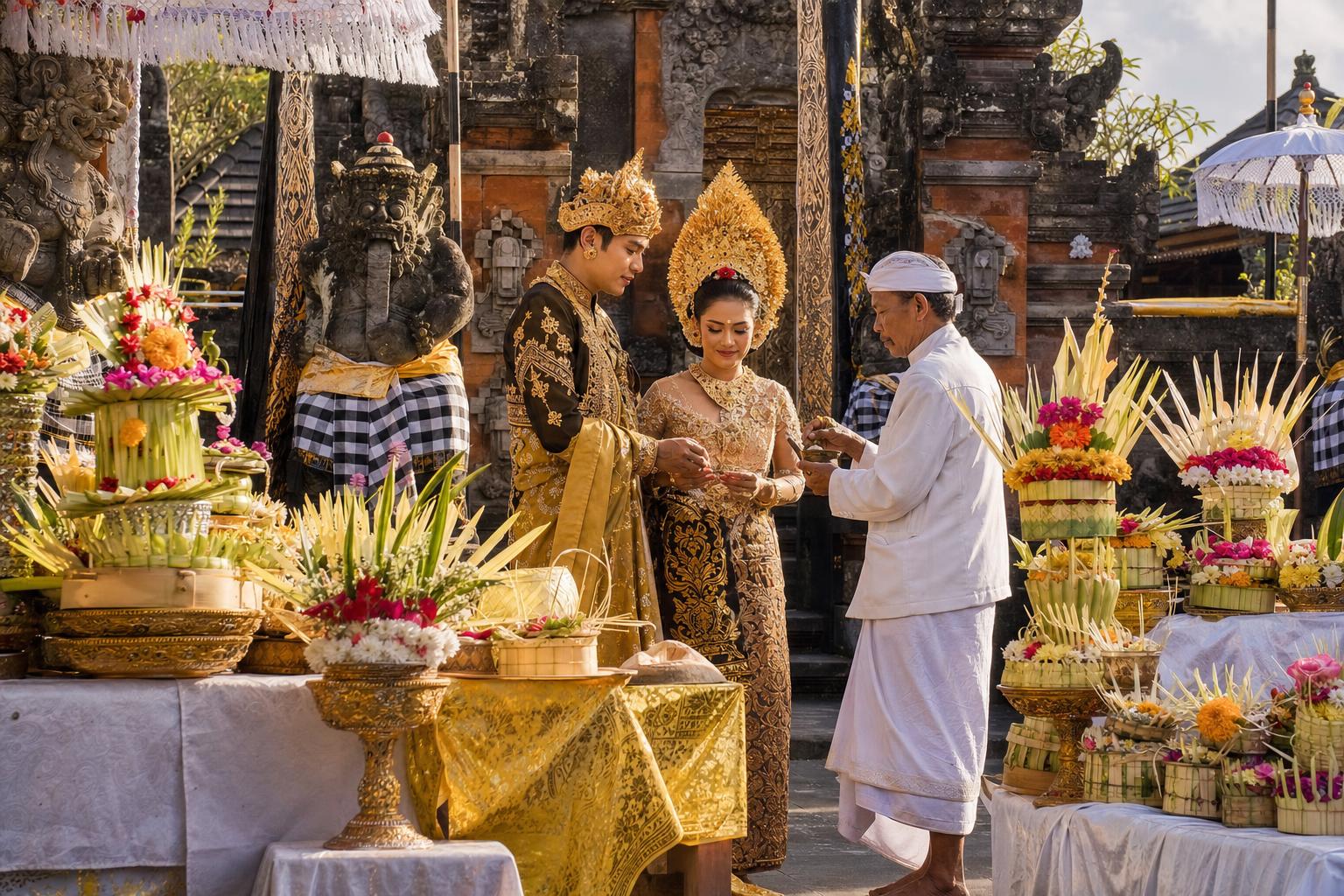
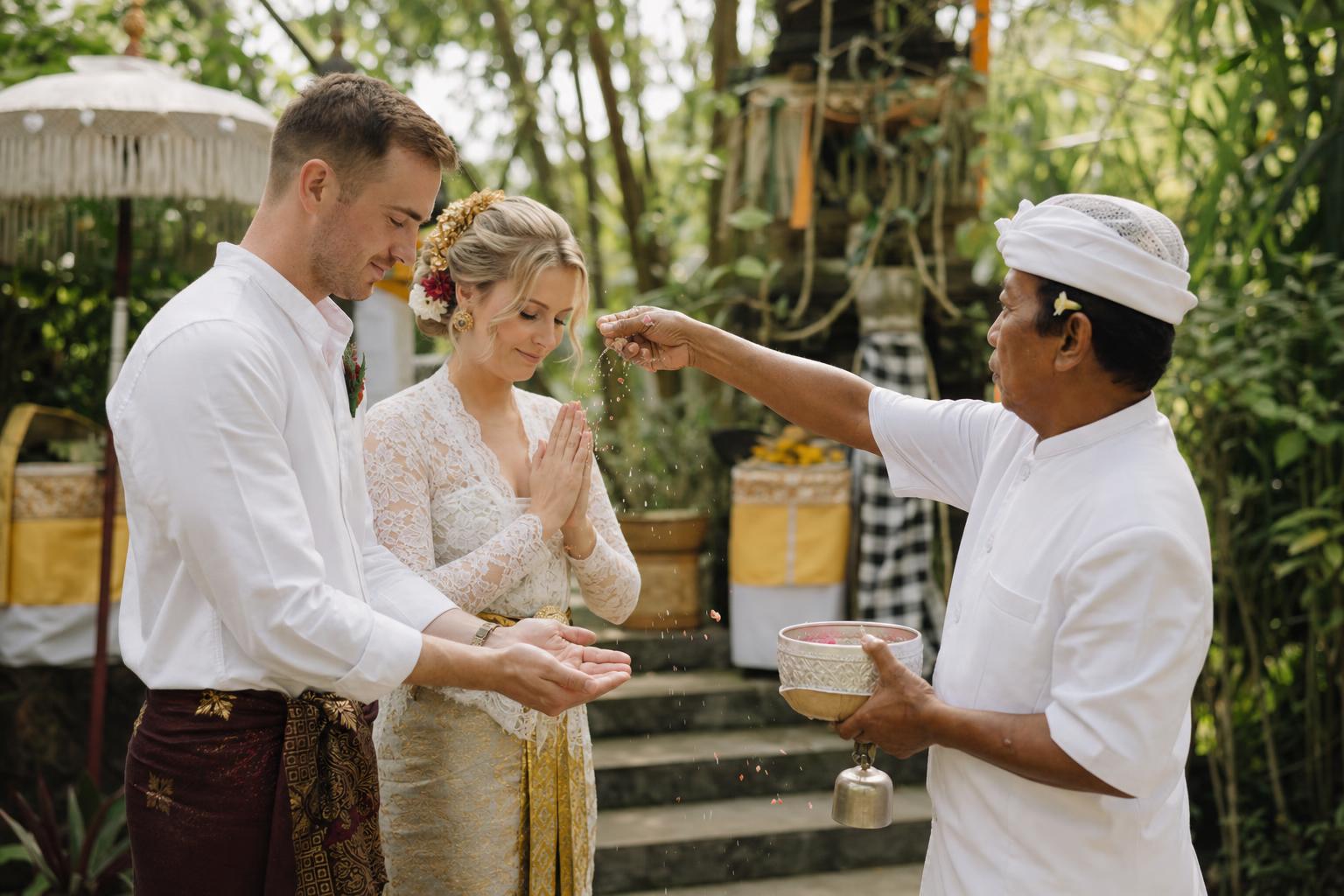
The pemangku arrives dressed in white, and the offerings are already in place: woven palm-leaf trays of flowers, rice and incense, made by hand the day before. He chants the prayers in Balinese, rings a small bell, and sprinkles you with holy water. Grains of blessed rice are pressed to your forehead and temples, and a frangipani goes behind each ear.
The whole ritual takes around half an hour. It is quiet, fragrant and unexpectedly moving; guests who arrived expecting a photo opportunity tend to fall silent by the second prayer.
Blessing or full Balinese wedding?
The two get confused constantly, so here is the line. A blessing asks the gods to look kindly on your marriage. A traditional Balinese wedding, the Pawiwahan, is the Hindu marriage rite itself: ceremonial dress, hours of ritual, and religious weight in the community that hosts it. It is normally for couples marrying into the faith, or with Balinese and Indonesian family.
For everyone else the blessing is almost always the right call. You keep your own vows, your own dress and your own beliefs, and the island still enters the day properly.
How couples use it
Eloping couples often make the blessing the whole ceremony: the two of you, the priest, a photographer, and nothing else on the schedule. That is exactly the shape we describe in how to elope in Bali, and it works beautifully.
At bigger weddings it usually opens the day, before the Western-style vows, and settles everyone into the place. It also sits naturally inside a renewal of vows, where couples want ritual without any legal machinery. And a few couples hold it the evening before the wedding, just the two of them, as a quiet start before the loud part.
Where and when to hold it
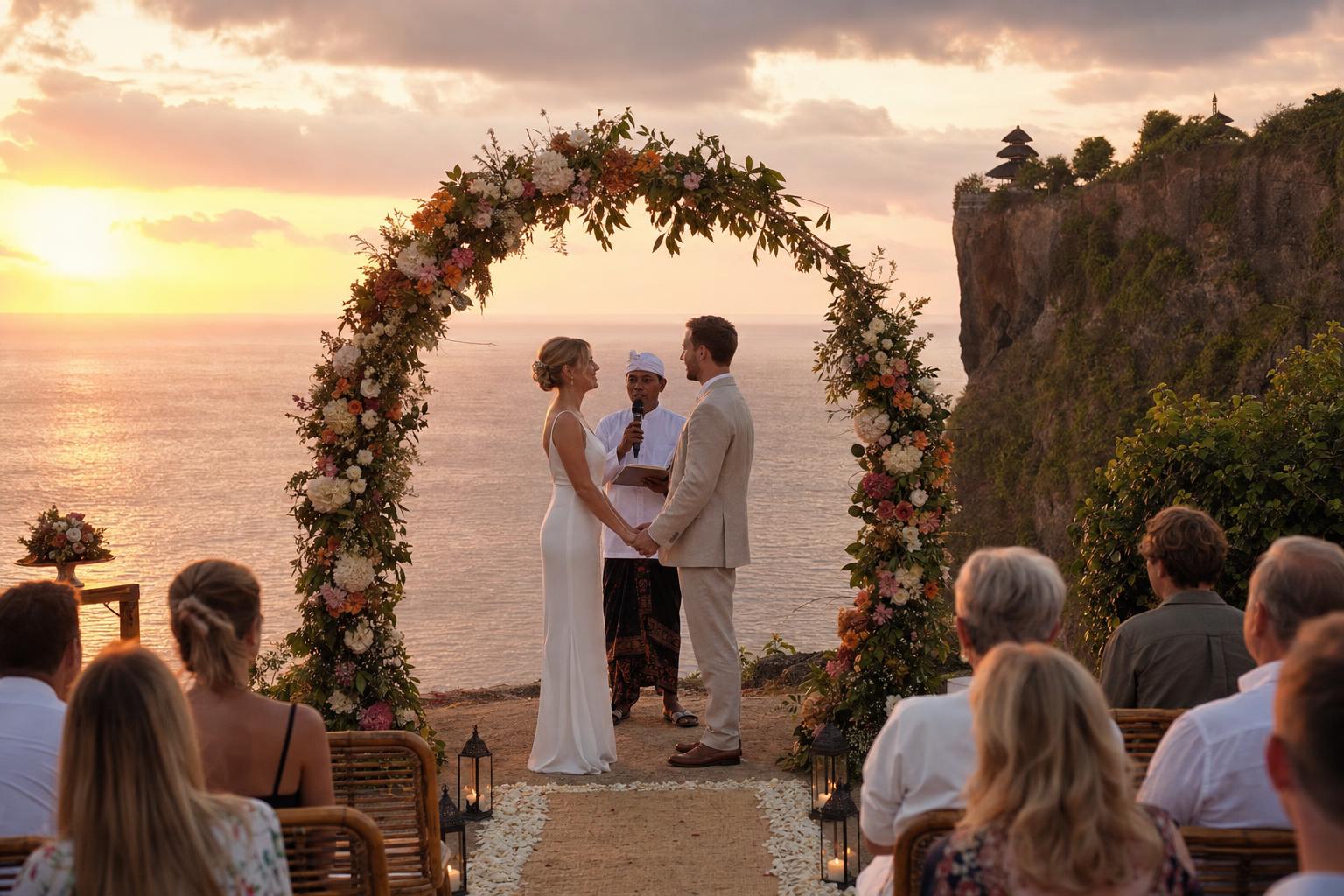
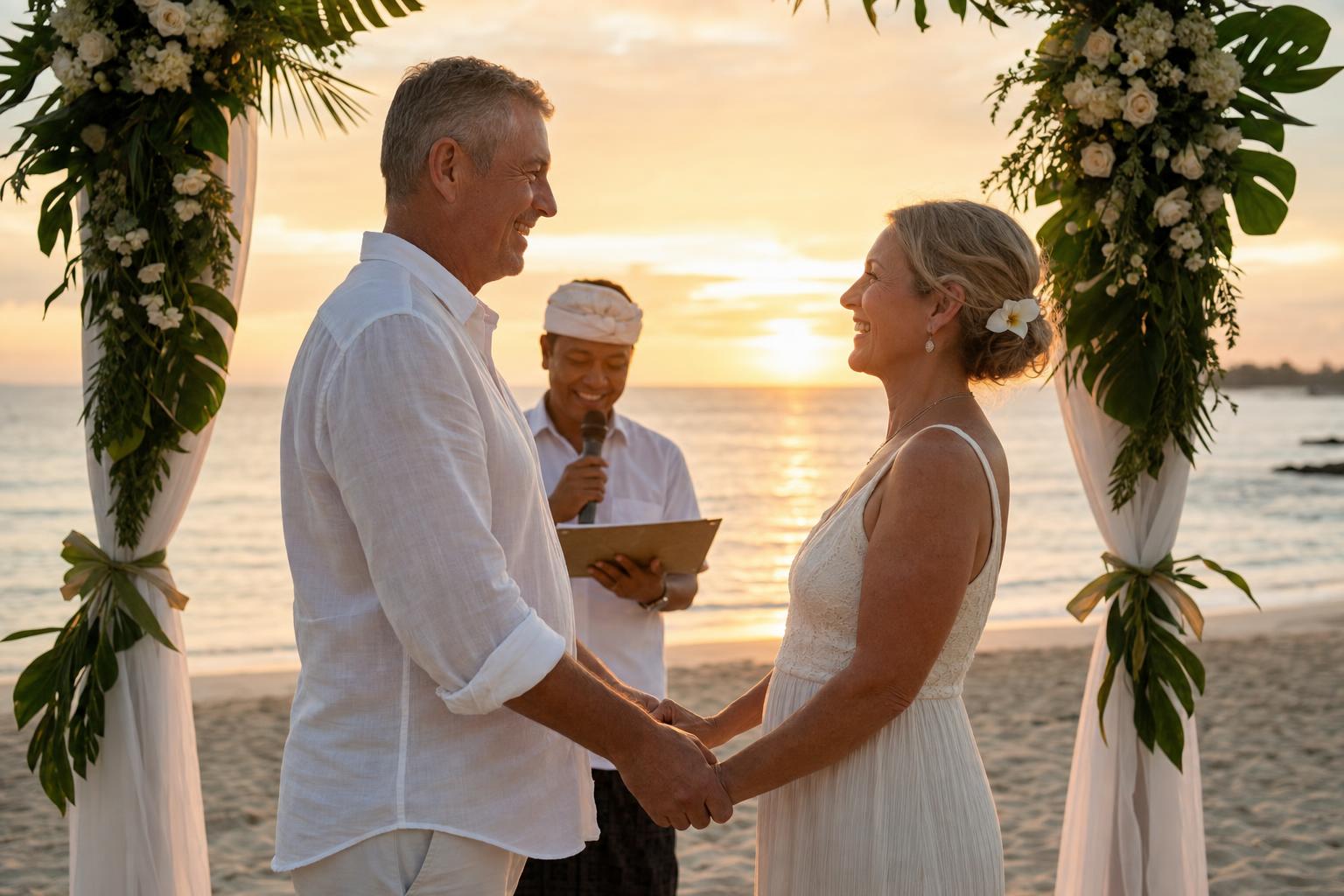
Anywhere the offerings can be laid out: a villa garden, a clifftop lawn, the sand at low tide. The river valleys around Ubud suit the mood especially well, all green shade and moss-covered stone.
Timing is flexible. Morning blessings feel private and calm; late afternoon pairs well with vows at golden hour, since the sun sets between 6pm and 6.30pm in Bali all year. In the wet months from November to March we keep a covered spot ready, because the ritual moves easily and loses nothing indoors.
One practical note we always raise: the holy water is real water and the rice is real rice. We schedule hair and makeup with the blessing in mind, and we brief the photographer to stay close for the rice, because that frame is often the best one of the day.
The cost, and the legal question
A blessing runs from 700 to 2,500 USD, which makes it the least expensive genuine ceremony we arrange. What you are paying for is the pemangku, offerings made by hand, and a setting arranged around the ritual.
It has no legal standing anywhere, and that is exactly why it is easy. No religion declarations, no embassy letters, no registry office. Most couples sign the papers at home and let Bali be the wedding. If you would rather have the marriage registered in Indonesia, read can you get married in Bali legally first, because the conditions surprise almost everyone.
International couples who want a genuine sense of the island in their day, either on its own or added to a symbolic or legal ceremony.
What's included
A local priest
A pemangku leads the blessing with warmth and authenticity.
Holy water & offerings
The traditional flowers, water, and offerings of a Balinese blessing.
Stands alone or adds on
Hold it by itself or weave it into your main ceremony.
Explained for guests
The symbolism shared so everyone understands the moment.
What to expect
Arrange the priest
We book the pemangku and prepare the offerings.
The blessing
A short, sincere ritual, on its own or within your ceremony.
Carry on
The blessing sets a rooted, peaceful tone for the rest of the day.
Why couples choose us
We know the priest, not a list
The pemangku who leads your blessing is someone we have worked with, and we brief them on who you are beforehand. That is the difference between a ceremony that lands and one that feels hired in.
You understand what is happening
The holy water, the offerings, the order of the rituals: we walk you through it in plain English before the day, so you are present for it rather than a step behind.
It fits around your other ceremony
Most couples add the blessing to a symbolic or legal ceremony. We sequence the two so the day flows and nobody is standing in the heat between them.
Estimated cost
The priest, the offerings, and the setup are the base. What moves the number is how elaborate the offerings are, whether you want gamelan and dancers, and how far the pemangku travels. Couples who add the blessing to a larger day usually land near the bottom of the range. Put a number against your own day in the price simulator.
Good to know
Common questions
Is a Balinese blessing legally binding?+
No, it is symbolic and open to couples of any faith, which is exactly why international couples love it. Most sign the legal papers at their registry office at home, before or after the trip. Registering a marriage in Indonesia is a separate process with strict conditions.
Can we add the blessing to a beach or villa ceremony?+
Yes, and that is how most couples use it. You exchange your own vows, then the pemangku's blessing roots the moment in the island. We time the two so neither feels rushed.
How long does a Balinese blessing take?+
Around half an hour: prayers, holy water, blessed rice and flowers. It fits into a wedding day without stretching the timeline, whether it stands alone or opens a longer ceremony.
Do we have to be Hindu to have a Balinese blessing?+
No. The blessing is open to couples of any faith or none. The pemangku asks the gods to look kindly on your marriage; nothing in the ritual asks you to convert, declare a religion or sign anything.
What should we wear for a Balinese blessing?+
Your wedding attire works, with one addition: a sash tied at the waist as a mark of respect, which we bring for you and your guests. Some couples go further with a full sarong and kebaya, and we can arrange the dressing too.
Is a Balinese blessing the same as a traditional Balinese wedding?+
No. The blessing is a short symbolic ritual open to everyone. The Pawiwahan is the full Balinese Hindu marriage rite, with ceremonial dress and hours of ritual, normally for couples marrying into the faith. If you are unsure which one you want, you almost certainly want the blessing.
How much does a Balinese blessing cost in Bali?+
From 700 to 2,500 USD. It is the least expensive genuine ceremony we arrange, because you are paying for a priest and handmade offerings rather than production. Added to a larger wedding day, it is a small line with a large effect.