How to choose a Bali wedding planner: red flags and five questions
Everyone has beautiful photos and everyone promises a stress-free day. Here is how to tell a good Bali wedding planner from a polished website: what the job really involves, what should make you pause, and the five questions to ask before you pay a deposit.
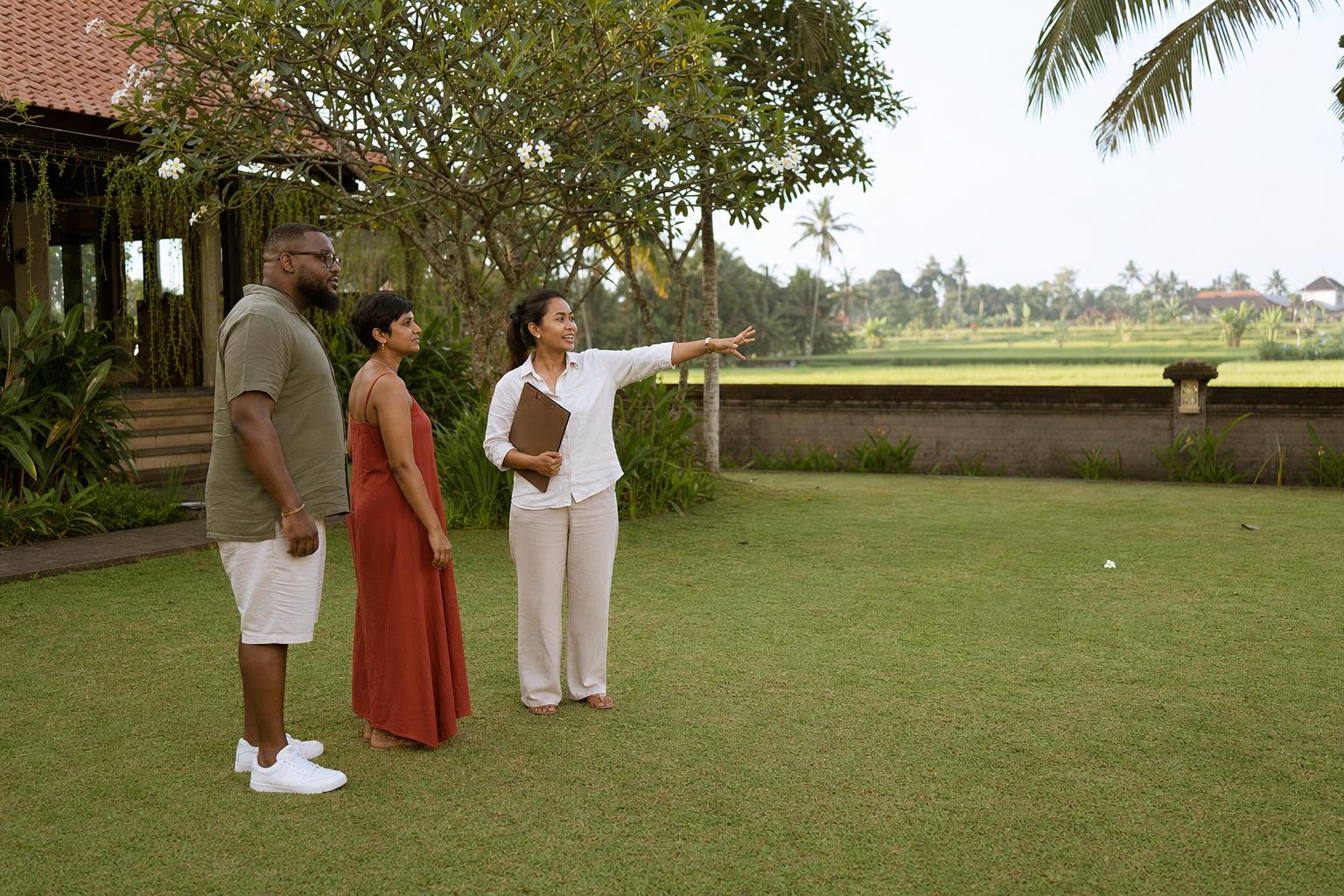
You have saved a few villas, a few beach views, and possibly 47 pictures of the same flower arrangement. Somewhere in there you need to choose a wedding planner: someone you may never have met, in a country you may have visited once, to look after one of the most important days you will have.
Everyone has beautiful photos. Everyone promises a stress-free wedding. Nobody’s website says “you will need to chase us five times.” So here is how to tell the difference: what a good planner actually does, what should make you pause, and what to ask before any money changes hands.
If you would rather watch, the video covers the same ground:
What you are actually paying for
With full wedding planning, the work starts long before the day. A good planner takes all your ideas and turns them into something that fits your budget, your venue, and your real guest count. They find the right suppliers, check the quotes, set the timings, and keep track of who is doing what, because “I thought someone else was doing that” is a sentence nobody wants at a wedding.
On the day, their team keeps things moving, answers the suppliers’ questions, and deals with the small problems before you hear about them.
How much they handle depends on what you book. Full planning and wedding-day coordination are different jobs: one shapes the whole wedding with you over months, the other takes a plan you have built and runs it on the day. Always ask which one you are being quoted for.
What a good planner checks that you will not
Venue photos show the view. A planner looks at everything around it.
That ceremony spot is lovely, but is there shade at 4pm? Can your grandparents reach it comfortably, or is it forty steps down a cliff path? Where do guests wait while the dinner is being set up? And if it rains, where does everyone go? The answer should be somewhere you would still be happy to get married, not simply somewhere dry.
If a planner does not raise questions like these on a site visit, they are probably not thinking about them.
What should make you pause
A quote much lower than the others
A low quote is not automatically a bad sign. But if one is much lower than the rest, find out why. Does it cover the same number of guests, the same setup, the same hours? Are the extra charges included, or still to come?
Some quotes start low and grow later, as you discover that the thing you assumed was included is an extra. Compare like with like before you compare totals, and if you are unsure what belongs in a full quote, what is included in a Bali wedding package lists the usual lines and the ones that usually sit outside.
Photos you cannot place
Ask which photos are weddings they actually organised and which are inspiration. There is nothing wrong with mood boards, or even AI images, as long as you know which is which.
Better still, ask them to talk you through one real wedding: what they arranged, what the couple’s budget was, and what changed along the way. That tells you far more than a sunset photo.
Answers that are not answers
You do not need replies within 30 seconds. A good planner may be at a wedding, and you would want them paying attention to it. You do need clear answers, and a reasonable idea of when you will hear back.
If you keep asking “is this included?” and the reply is always “don’t worry, we’ll take care of you”, ask again. It is reassuring, and it is still not an answer.
Nothing in writing
Get the agreement in writing: what is included, what you are paying, when payments are due, and what happens if plans change. You do not need to feel awkward about it. It is your wedding and your money, and reading the details is part of the job.
Yes to everything
You want a good listener, and you also want someone who can say “we can do that, but it will cost more”, or “that setup will not work at this venue.” An honest “probably not” is often more useful than an enthusiastic “of course!”
In-house suppliers
Some planners work with their own photographer, catering, or decoration team. That can work well. Ask whether you can choose other suppliers if you want to, and whether that changes the price. What matters is understanding your options before you book.
No feel for the local side
This is Bali, so you want someone who understands venue rules, local ceremonies, and any permissions your plans might need, such as the banjar, the music curfew, or the beach access. If you are planning a legal ceremony, ask who will check the paperwork for your situation. Can you get married in Bali legally? gives you enough background to judge whether the answer you get makes sense.
What a good planner sounds like
Usually, quite practical. They ask about your budget without making it uncomfortable. They listen to what matters to you, then explain the trade-offs: “If you want this venue, we may need to simplify the flowers or the guest count.” “If dinner is your priority, let’s move some of the decoration budget there.” Advice like that helps you decide.
Look for real experience: weddings they can explain in detail, suppliers they know well, and ideally experience with the kind of celebration you are planning. A small villa wedding and a large hotel wedding need different things. Ask for reviews, and whether a past couple would be happy to talk to you.
And ask about the backup plan. What happens if it rains? If a supplier cancels? Nobody can promise nothing goes wrong. You want to hear how they would handle it.
Five questions for your first call
Keep these on your phone:
- What weddings have you planned that are similar to ours? Ask for examples of a similar size, style, or venue.
- What does your fee include, and what would we pay extra for? Give them time to explain, and take notes.
- How will we stay in touch during planning? Who is your main contact, how often will they check in, and when can you expect replies?
- If a supplier cancels, what happens next, and how are any extra costs handled? Better to ask now, while everyone is relaxed.
- Who will actually be there on our wedding day, and for how long? The person on your first call may not be the person running the day. That can be completely fine. You just want to know who you are working with.
You are not trying to catch anyone out. You are finding out whether you feel comfortable making plans with this person. Can you ask something without feeling silly? Do you understand their answers? Do they actually listen? You will be talking to them a lot, and it helps if you enjoy it.
When to start looking
Once you have a rough date, a guest count, and a budget in mind, start the conversation. You do not need every detail ready, because helping you work those out is part of the job. If a particular date or venue is a must-have, give yourself more time. If the wedding is only a few months away, start with what is available and stay open to a few alternatives for the venue and suppliers.
Planning a Bali wedding: where to start puts the planner in the wider order of decisions.
Ask us the same five questions
That applies to us as well. Send me your rough date, how many guests you are expecting, and what you are picturing (a relaxed villa wedding, a dinner by the beach, or “still figuring it out”), plus a rough budget if you have one. Then ask us all five questions. We would rather you choose us with your eyes open.